Food Dehydrator Temperature & Time Chart: 40+ Fruits, Vegetables and Herbs (Pakistan Guide)
Share
Every dehydrator owner asks the same two questions: what temperature, and how many hours? This chart answers both for more than 40 fruits, vegetables and herbs grown and sold in Pakistan, with their Urdu names, how to prepare each one, whether to blanch it, and how to tell when it is really done.
The times come from university food-preservation guides (Clemson, University of Missouri and Colorado State extension services), plus tropical-fruit sources for mango, papaya and chikoo. All are listed at the end. Treat them as starting ranges, not fixed timers: your machine, the load and the weather will move them.
Quick Answer: Dehydrator Temperatures by Food Type
| Food | Temperature | Ready when |
|---|---|---|
| Fruits | about 57–60°C (135–140°F) | Leathery and pliable, no moisture when cut |
| Vegetables | about 52–60°C (125–140°F) | Brittle or crisp; snaps |
| Herbs and leaves | about 35–46°C (95–115°F); up to ~52°C in very humid weather | Leaves crumble, stems snap |
| Meat (jerky) | Follow a tested jerky recipe | Meat must reach 71°C (160°F) for safety |
About 60°C (140°F) is the standard all-round setting in extension guides for fruit and vegetables. Herbs need far less heat, because their aroma leaves with the water at high temperatures.
How to Use This Chart
- Times are for a dehydrator, not an oven or the sun. Ovens can take two to three times longer.
- Slice thickness changes everything. 1/8 inch is about 3 mm, 1/4 inch about 6 mm, 1/2 inch about 12 mm. Thin, even slices finish together; halves and whole fruit take much longer than slices.
- Humidity and load add hours. A full commercial cabinet on a humid monsoon day in Karachi or Lahore dries slower than a half-loaded home machine in dry Peshawar or Quetta weather. Rotate trays if the back or bottom dries faster.
- Check from the low end of the range, then every hour. Write down your times – after a few batches you will have your own chart for your own machine.
- Dry similar foods together. Onion, garlic and peppers should be dried on their own, because their smell transfers to everything else.
Fruit Drying Chart
Set the dehydrator to about 57–60°C. Light fruits such as apple, pear and banana can be dipped in lemon water (roughly equal parts lemon juice and cold water) to reduce browning.
| Fruit | Preparation | Hours | Ready when |
|---|---|---|---|
| Apple (seb) | Peel, core, slice or ring about 3 mm; lemon dip optional | 6–12 | Leathery, pliable, no moist area when cut |
| Apricot (khubani) | Pit and halve; slice for faster drying | 24–36 (halves) | Soft, pliable, no moist centre |
| Banana (kela) | Firm yellow fruit; peel, slice 6–9 mm; lemon or honey dip optional | 8–10 | Pliable to crisp |
| Cherry (gilas) | Stem, pit, halve | 8–36 (cut pieces at the low end) | Shrivelled, leathery, no moisture pockets |
| Fig (anjeer) | Fully ripe; halve large figs; dip whole small figs in boiling water 30 seconds | 6–12 | Leathery, no moist centre |
| Grapes to raisins (angoor → kishmish) | Seedless whole: dip in boiling water 30 seconds, then cold water, to crack skins | 12–20 | Raisin-like, no moist centre |
| Kinnow / orange peel | Outer peel only, avoid the white pith (bitter) | 8–12 | Crisp |
| Mango (aam), ripe | Peel, cut away from stone, slice 6–8 mm | about 8–12 | Leathery, no wet or sticky spots |
| Papaya (papeeta) | Peel, remove seeds, slice about 10 mm | about 6–10 | Leathery, pliable |
| Chikoo (sapodilla) | Peel, remove seeds, slice about 10 mm | about 6–8 | Leathery, pliable |
| Peach (aaru) | Pit and halve or slice; lemon dip | 36–48 (halves); less for slices | Soft, pliable, no moist centre |
| Pear (nashpati) | Halve and core; peeling preferred | 24–36 (halves) | Soft, pliable, no moist centre |
| Persimmon (amlok / japani phal) | Peel and slice with a stainless steel knife | 12–15 | Leathery, pliable |
| Pineapple (ananas) | Peel, remove eyes and core, slice about 12 mm | 24–36 | Leathery but not sticky |
| Plum (aloo bukhara) | Whole: dip in boiling water 30 seconds to crack skin | 24–36 | Leathery; stone does not slip when squeezed |
| Strawberry | Wash, hull; halve or slice to speed up | 24–36 whole; less for slices | No moisture; whole berries rattle when shaken |
Mango leather (aam papar): spread purée thinly on silicone dehydrator sheets. It is ready when you cannot leave a dent by pressing the middle, and it peels off without breaking.
Vegetable Drying Chart
Most vegetables should be blanched first – a short dip in boiling water, then cold water – to keep colour and flavour and to shorten drying and soaking time. Count blanching time from when the water returns to the boil. Onion, garlic, peppers, okra and mushrooms need no blanching. Dry at about 52–60°C.
| Vegetable | Preparation and blanching | Hours | Ready when |
|---|---|---|---|
| Beans, green (phali) | Cut short or lengthwise; boil 2 min | 8–14 | Brittle |
| Beetroot (chukandar) | Cook fully, cool, peel, cut 3 mm strips; no further blanch | 10–12 | Brittle |
| Cabbage (band gobhi) | Remove outer leaves, core, cut 3 mm strips; steam 2½–3 min | 10–12 | Crisp |
| Capsicum and chillies (shimla mirch, mirch) | Stem, core, cut about 10 mm rings; no blanch | 8–12 | Crisp, brittle |
| Carrot (gajar) | Peel if preferred, slice or strip 3 mm; boil 3½ min | 10–12 | Brittle |
| Cauliflower (phool gobhi) | Small florets; boil 3–4 min | 12–15 | Brittle |
| Corn (makai) | Husk; boil cobs 4–5 min, then cut kernels off | 6–10 | Brittle |
| Eggplant (baingan) | Slice about 6 mm; boil 3 min | 12–14 | Brittle |
| Garlic (lehsan) | Peel, slice or chop finely; no blanch; dry separately | 6–8 | Crisp |
| Mushroom (khumbi) | Shop-bought only; slice; no blanch | 8–10 | Brittle |
| Okra (bhindi) | Trim, slice 3–6 mm discs; no blanch | 8–10 | Brittle |
| Onion (pyaz) | Remove skin, top and root; slice 3–6 mm; no blanch; dry separately | 3–9 | Crisp |
| Peas (matar) | Shell; boil 2 min | 8–10 | Hard, shatter when hit |
| Potato (aloo) | Peel, slice 3 mm or 6 mm strips; boil 5–6 min | 8–12 | Brittle |
| Pumpkin (kaddu) | Remove seeds, peel, slice 3 mm; boil 1 min | 10–16 | Brittle |
| Spinach and greens (palak, sarson) | Young tender leaves, washed well; boil 1½ min | 8–10 | Crisp, crumbles |
| Tomato (tamatar) | Dip in boiling water 1 min to loosen skin, peel, slice or quarter | 10–18 | Crisp |
| Zucchini / summer squash | Slice 6 mm; boil 1½ min | 10–12 | Brittle |
Never dry wild mushrooms: drying and cooking do not destroy the toxins in poisonous varieties.
Herbs, Leaves and Ginger
Rinse, shake off the water and remove thick stems. Dry in a single layer at 35–46°C; in very humid weather you may need about 52°C. Check every hour – herbs scorch quickly near the end.
| Herb | Preparation | Hours | Ready when |
|---|---|---|---|
| Mint (podina) | Leaves off thick stems | 1–4 | Crumbles when rubbed |
| Coriander (dhania) | Leaves and thin stems | 1–4 | Crumbles |
| Fenugreek leaves (methi → kasuri methi) | Leaves only | 1–4 | Crumbles |
| Curry leaves | Strip from stalk | 1–4 | Crisp, snaps |
| Moringa leaves (sohanjna) | Small leaflets stripped from stalks | 1–4 | Crumbles to powder |
| Parsley / basil (niazbo) | Separate clusters, discard tough stems | 1–2 (parsley); 1–4 (basil) | Crumbles |
| Ginger (adrak) | Peel, slice very thin | about 6–8 at ~47°C | Snaps cleanly, no bend |
Making powders from these? See our step-by-step guide to onion, garlic, ginger, tomato and chilli powder.
Why You Should Not Turn the Heat Up
Higher heat looks like a shortcut, but it causes case-hardening: the outside dries into a hard shell and traps moisture inside. The piece looks finished, then spoils or moulds in the pack. Too much heat at the end can also scorch the food. If a batch is taking too long, make slices thinner, load fewer trays or rotate them – do not raise the temperature.
The opposite mistake matters too: stopping the machine overnight or drying too cool can let food spoil before it is dry. Run each batch straight through.
How to Test If It Is Really Dry
- Take a few of the thickest pieces off the tray.
- Let them cool for a few minutes – everything feels softer when warm.
- Fruit: cut or tear in half. No visible moisture, nothing squeezes out, and a folded piece does not stick to itself. Home-dried fruit holds about 20% moisture, so it stays pliable.
- Vegetables: should be brittle or crisp, at about 10% moisture. If a piece bends, it needs more time.
- Herbs: leaves crumble and stems snap.
After Drying: Condition, Then Store
Fruit needs conditioning. Pack the cooled fruit loosely in sealed glass jars for 7–10 days and shake them daily. If drops of water appear on the glass, put the fruit back in the dehydrator. Vegetables dried to brittle do not need this step.
Then pack in airtight containers or vacuum-sealed pouches and keep them cool, dry and dark. Most dried fruit keeps about a year at 16°C (60°F) but only about six months at 27°C (80°F); vegetables keep roughly half as long. Read the full method in our vacuum sealer and dried-food storage guide.
Which Dehydrator Works Best With This Chart?
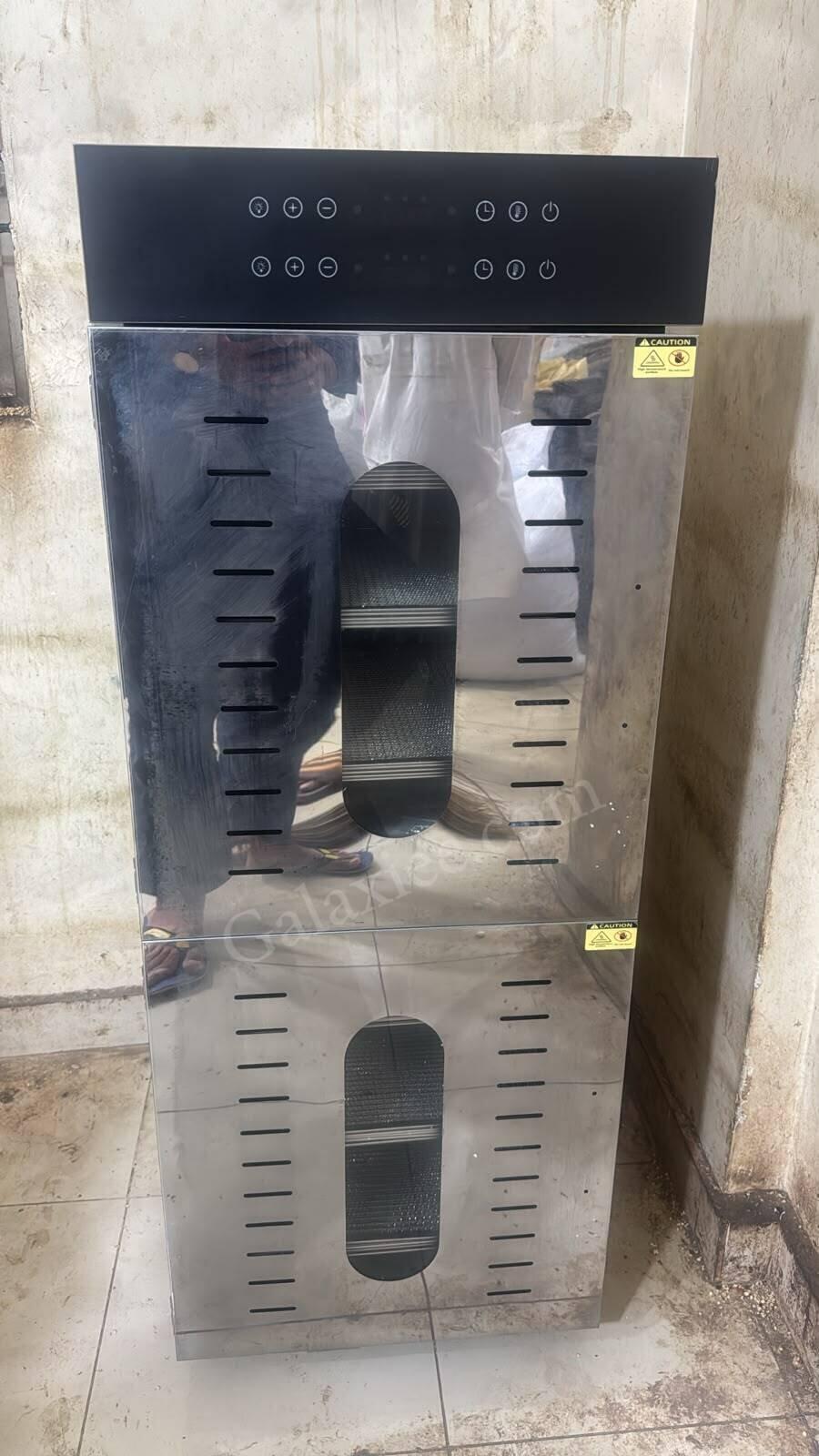
Any dehydrator with an adjustable thermostat lets you follow these ranges – herbs at 35–40°C and fruit at 60°C need very different settings. A timer helps with 10–36 hour runs, and stainless steel trays are easier to keep clean between products.
- Home use and learning: 6-tray or 8-tray models
- Small business: 10-tray, 12-tray or 16-tray stainless steel
- Regular production: 20-tray, 24-tray or 32-tray cabinets
Compare all sizes and current prices on our food dehydrator page or in the dehydrator buying guide. Planning to sell what you dry? Start with our value addition guide, which includes a batch-costing method.
Frequently Asked Questions
Q: What is the best temperature for a food dehydrator?
About 60°C (140°F) for most fruit and vegetables, and 35–46°C for herbs and leaves. Meat jerky needs a tested recipe that brings the meat to 71°C.
Q: How long does it take to dry mango in a dehydrator?
Ripe mango slices about 6–8 mm thick usually take about 8–12 hours at 57–60°C. Thicker slices, a full machine or humid weather take longer.
Q: How long does tomato take to dry?
About 10–18 hours, depending on how thick you slice it. Dry until crisp if you plan to make tomato powder.
Q: Can I dry different foods together?
Yes, if they need similar temperatures and times. Dry onion, garlic and chillies separately – their smell transfers to fruit.
Q: Can I leave the dehydrator on overnight?
Many long batches run overnight. Use a machine with a timer and thermostat, keep it in a ventilated place on a stable surface, and check the food in the morning – fruit can over-dry or scorch near the end.
Q: Why is my dried fruit hard outside and soft inside?
The temperature was too high (case-hardening) or the slices were too thick. Lower the heat, slice thinner and evenly, and test the thickest piece after cooling.
Q: Do I have to blanch vegetables?
Most vegetables keep better colour and flavour if blanched. Onion, garlic, peppers, okra and mushrooms do not need it.
Sources
- Clemson Cooperative Extension – Drying Vegetables and Drying Fruits
- University of Missouri Extension – Drying Foods and Drying Fruits (GH1563)
- Colorado State University – Drying Herbs
- National Center for Home Food Preservation – Packaging and Storing Dried Foods
- Mango, papaya and chikoo times: Campbell, Preservation of Tropical Fruits by Drying (via Edible South Florida) and Brod & Taylor dehydrating guide; ginger: Brod & Taylor ginger powder
- Meat safety temperature: Kansas State University Research and Extension