80 & 96 Tray Industrial Food Dehydrator Guide for Factories and Exporters
Share
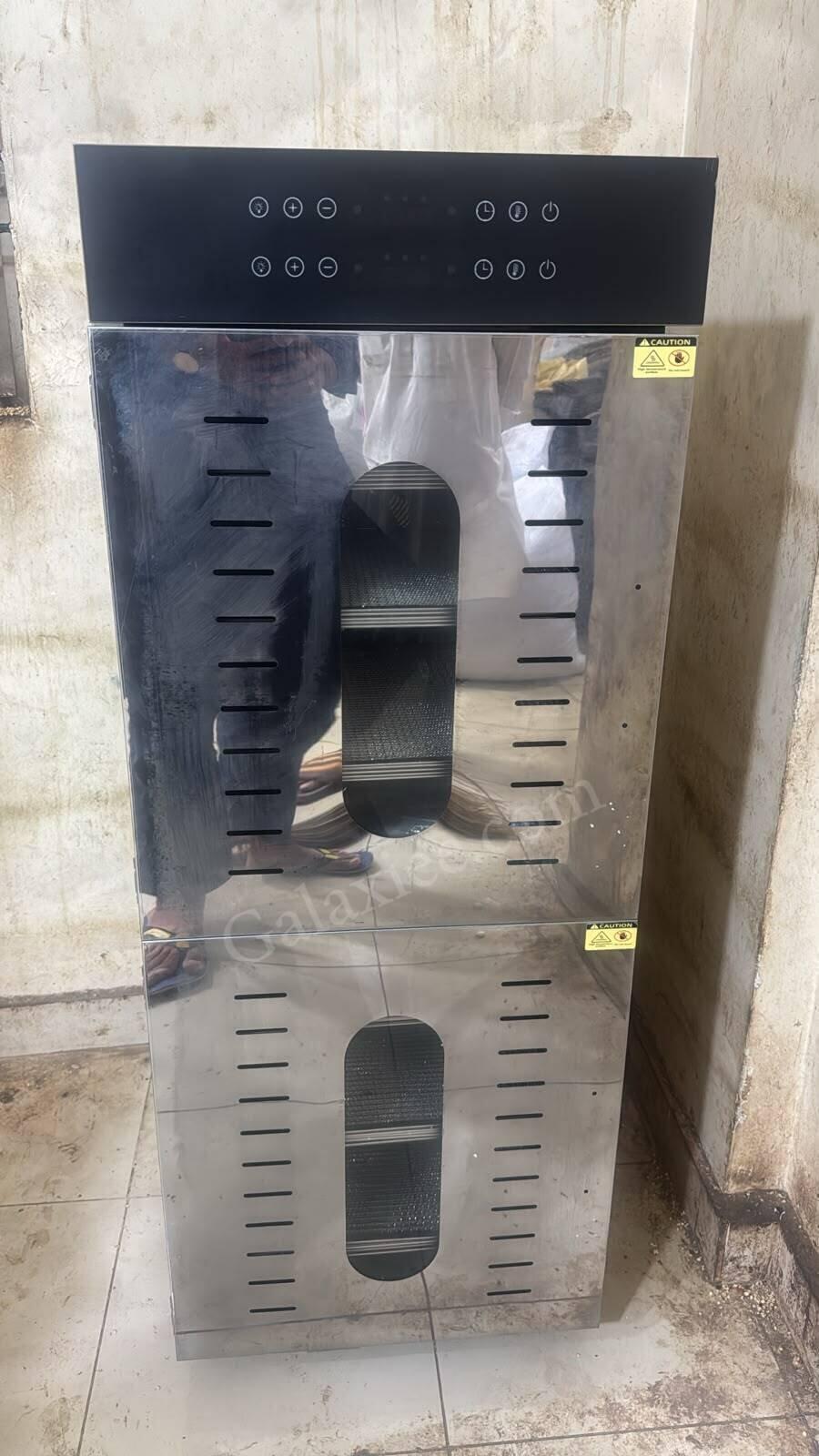
For dry-fruit factories, exporters, large farms and food manufacturers, drying capacity is measured in hundreds of kilograms per batch. Galaxiee's 80-tray (FD-80D) and 96-tray (FD-96D) stainless steel dehydrators are our largest standard machines. This guide covers what separates them, the electrical and room planning a factory-size dryer needs, how to run one efficiently, and what to do when you need more than 96 trays.
80 vs 96 Tray Compared
| Feature | 80 tray (FD-80D) | 96 tray (FD-96D) |
|---|---|---|
| Tray size | 40 × 40 cm, SS304 mesh | 40 × 40 cm, SS304 mesh |
| Total drying area | 12.80 m² | 15.36 m² |
| Tray spacing | 3.6 cm | Confirm with our team |
| Fans | 12 | 12 |
| Heating power | 6000W | 8000W |
| Voltage | 220/240V or 380V, 50/60 Hz | 220/240V or 380V, 50/60 Hz |
| Timer | 0–24 hours | 0–24 hours |
| Memory after power cut | Yes | Yes |
| Size (W × D × H) | 1000 × 620 × 1720 mm | Confirm with our team |
| Net / gross weight | 140 / 160 kg | Confirm with our team |
| Listed approx. fresh load | 260–400 kg | Confirm with our team |
| Price (27 Nov 2026) | Rs.425,000 | Rs.525,000 |
From the 80-tray and 96-tray product pages; drying area is our calculation. Where a figure is marked "confirm", ask our team for the exact value before planning your room. Check the product pages for current price, stock and terms.
Which One?
- 80 tray: 6 kW and 12.8 m² of drying area. The practical choice if your electrical supply is limited, or you are moving up from 32–48 trays.
- 96 tray: 20% more trays and 8 kW of heat. Choose it if you run one main product at high volume through the season and your supply can carry the extra load.
At 27 Nov prices, drying area costs about Rs.33,000 per m² on the 80-tray and about Rs.34,000 per m² on the 96-tray – roughly the same, so choose on power supply and daily volume.
Electrical Planning Comes First
A 6–8 kW machine running 10–18 hours is a serious electrical load. At most, a 10-hour batch uses about 60 units (kWh) on the 80-tray and 80 units on the 96-tray; real use is lower as the thermostat cycles. Before ordering:
- Have a qualified electrician check the supply, cable size, breaker and earthing
- Decide between 220/240V and 380V three-phase, and tell us when you order
- Check your sanctioned load with your electricity company
- Size any generator to carry the full load for many hours
- Budget electricity per kg, not per batch: log units for full batches with a meter
Setting Up a Drying Room
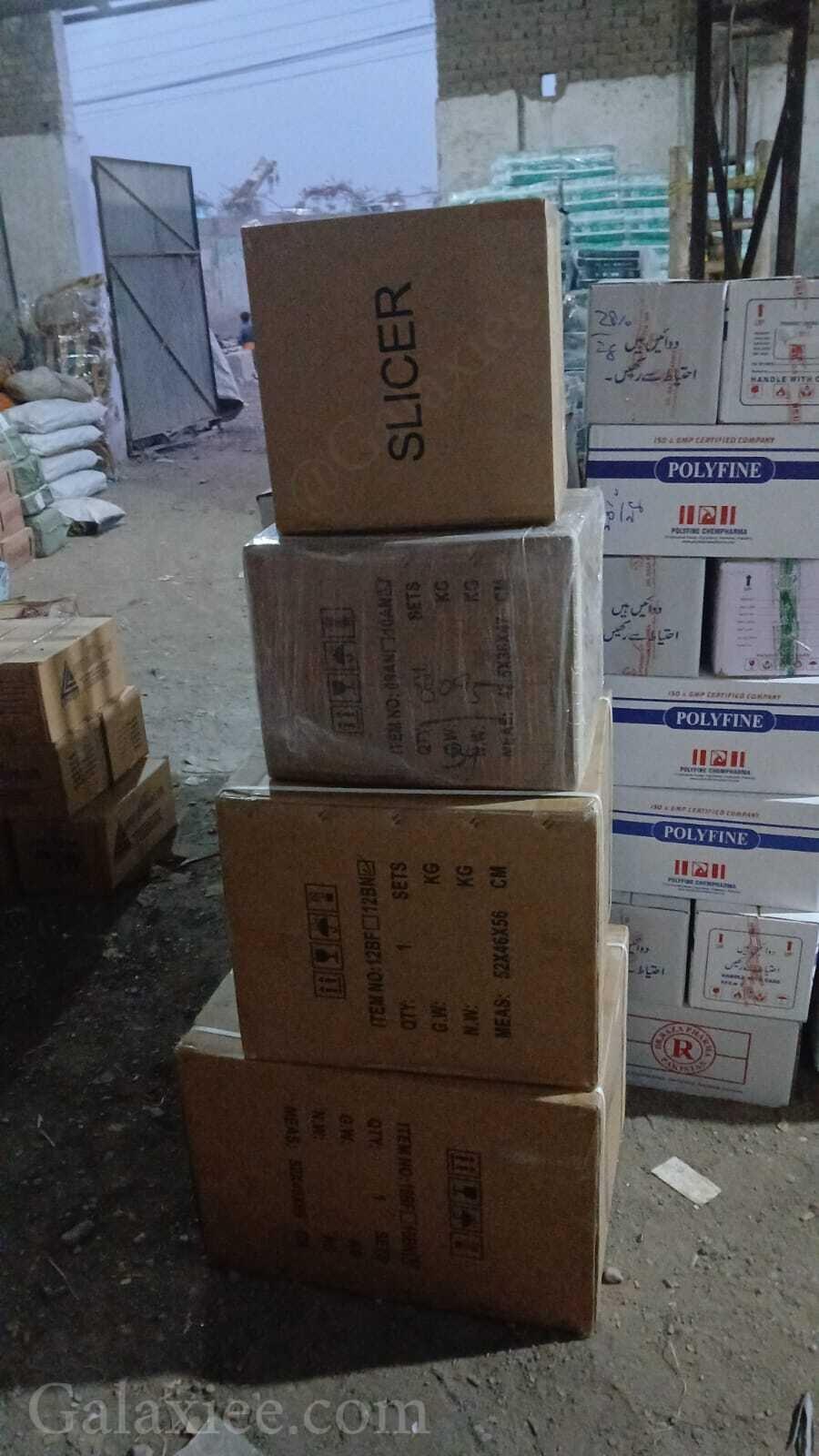
- Delivery access: the 80-tray is 1 m wide and 1.72 m tall and weighs 140 kg. Measure doors, stairs and corridors before delivery and arrange people or equipment to move it.
- Ventilation: the machine releases warm, moist air for hours. An exhaust fan keeps the room dry and protects stock waiting to be packed.
- Flow of work: receiving → washing → slicing → loading → drying → cooling → conditioning → grinding/packing → storage. Keep raw and finished areas apart.
- Floor: level, washable, and strong enough for the machine plus loaded trays.
Running a Factory-Size Dryer Efficiently
- Even slicing is everything. Hundreds of kg sliced by hand will vary in thickness, and the thickest pieces set the batch time. Use a commercial slicer.
- Standard loading. Fix how many kg go on each tray for each product, write it down and train staff to follow it.
- Check zones. On the first runs, mark which trays finish first and rotate accordingly.
- Batch records. Date, product, fresh kg, trays, temperature, hours, units, dried kg, moisture check, operator. Buyers and food authorities increasingly ask for this.
- Downstream capacity. A 300 kg batch of fresh produce needs grinding and packing capacity to match: larger powder grinders, sealers and a weighing scale.
Drying times for 40+ foods are in our temperature and time chart.
Food Safety, Licences and Export
At factory scale you need a licence from your provincial food authority, proper labelling and written hygiene procedures. Export buyers may also ask for certifications and test reports on moisture and microbiology. Our value addition guide links the Punjab and KP licensing pages and the National Bank of Pakistan feasibility study on dehydrated fruit and vegetables.
Ordering and Delivery
The 80 and 96-tray product pages currently list full advance payment (with a discount for advance payment), no Cash on Delivery, and delivery by cargo (adda builty). Confirm current terms on the product page or with our team, and inspect the machine on arrival.
Need More Than 96 Trays?
For larger or custom dehydrators, heat-pump and industrial dryers, or commercial freeze dryers, Galaxiee imports on order. See freeze dryers and industrial dryers on order.
Frequently Asked Questions
Q: How much can an 80-tray dehydrator dry per batch?
Its product page lists about 260–400 kg of fresh produce per batch, depending on the food and slice thickness.
Q: Does a 96-tray dehydrator need three-phase power?
It is listed for 220/240V or 380V at 8000W. Most sites will need an electrician to confirm the supply; many will choose 380V three-phase for a load this size.
Q: 80 or 96 tray – which is better value?
Cost per m² of drying area is almost the same. Choose on your daily volume and what your power supply can carry.
Q: Can I dry meat in an industrial dehydrator?
Meat must reach a safe internal temperature (71°C / 160°F for beef jerky) and follow a tested process. The 30–90°C range allows this, but follow food-safety guidance and your food authority's rules.
Compare all sizes in the dehydrator size guide or on the food dehydrator page. For factory projects, contact us with your products, daily tonnage and power supply.